I’m so excited to reveal my first Power Tool Challenge project! The Power Tool Challenge is a monthly challenge in which a group of bloggers builds something with power tools; the theme changes each month. This month, the project had to cost less than $10. Challenge accepted: DIY flower boxes for under $10!
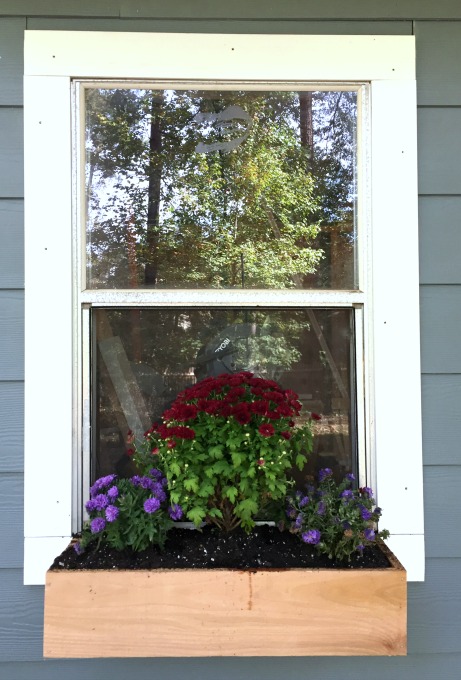
I have always loved these kinds of window boxes. They give such character to a home or building.
These DIY flower boxes are a great beginning builder project. Here’s how to make them:
Materials:
FYI: this post contains affiliate links. Please click here for my full disclosure policy.
1 or 2 6-foot cedar fence posts – $2.65 each. I used two per flower box, because I made the flower boxes the width of the bottom on the window, which was 23 1/4 inches. Obviously, if you make smaller ones, you could use less wood and get away with using one fence post.
(Note: If you don’t like cedar, you could make these using any kind of wood. I like cedar because I love the smell and the patina it gets as it ages outdoors.)
Miter saw – I use this RYOBI miter saw and love, love, love it!
Tape measure
Pencil
Wood glue
Stapler – I use this RYOBI ONE+ 18-volt crown stapler with one-inch staples
2-inch deck screws
Drill – my favorite tool is this drill
Liner for flower box – I used a coco natural liner, but you could use a plastic one or simply staple part of a trash bag inside the box. If the coco liner is too tall for the flower box, trim it with sharp scissors.
Potting soil
Plants
Instructions:
(1) Measure and cut the wood.
First, decide how big you want your flower boxes to be. For me, I wanted the flower boxes to be the same width as the glass in the windows.
That measurement was 23 1/4 inches. So, I was going to build a box with a front and back at 23 1/4 inches long. For the sides, I kind of eyeballed how wide I wanted the flower boxes to be, and settled on 6 inches. So, I cut two pieces at 23 1/4 inches and two pieces at 6 inches.
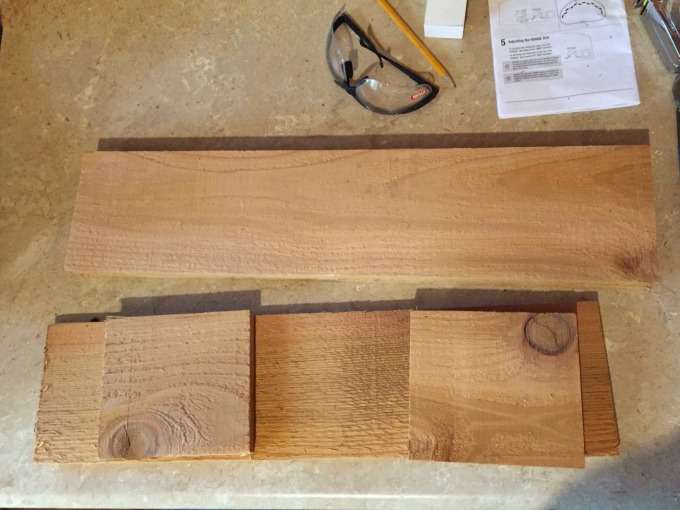
Note: the fence board was less than 6 inches wide (5 1/2 inches, to be exact), so 6-inch sides means that the bottom piece won’t fully cover the bottom of the flower box. There will be a small gap between the bottom and the back of the flower box. That’s fine with me, though, because it allows for drainage and it ended up as less than a half-inch wide gap. I wouldn’t have a gap bigger than that, though.
To calculate the measurement of the bottom piece, take the length of the front or back piece (here, 23 1/4 inches) and subtract twice the width of the fence post (5/8 inch), to account for the sides of the box. Make sense? It should eventually look like this:
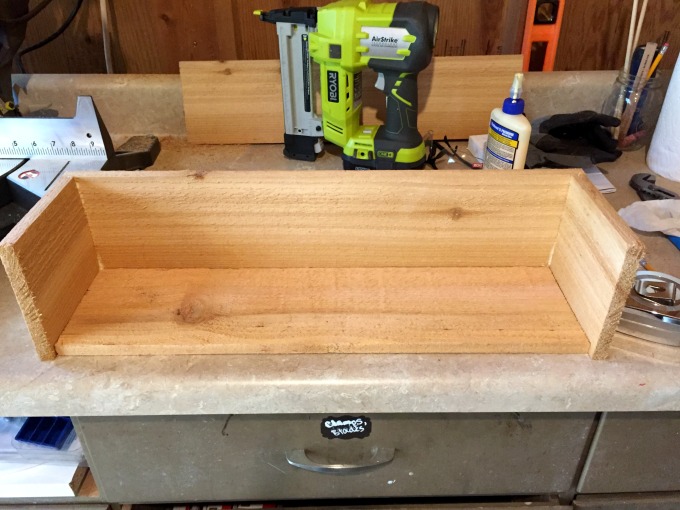
So, to calculate the length of the bottom piece: 23 1/4 – (2 x 5/8) = 22 inches. That’s how long to cut the bottom piece.
(2) Assemble the flower box.
To assemble the flower box, first, glue one of the sides to the front piece. Then staple the pieces together, along the edge, with the crown stapler to secure in place. I used two staples per side. Do the same for the other side piece. Then, glue and staple the bottom piece to the side pieces.
I know it seems odd to attach the bottom piece before the back, but – trust me – it is much easier to do it this way.
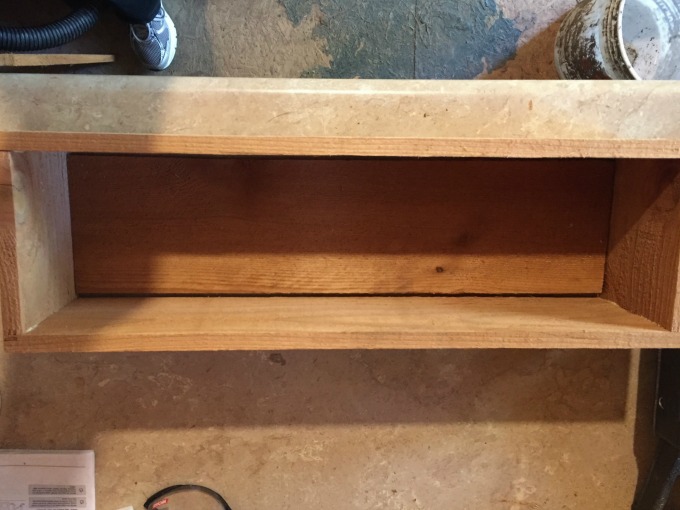
After you have the three sides and bottom all glued and stapled, add the back with glue first, then staples, too. You should end up with a box that looks like this:
(3) Attach it to the window trim.
Once the glue is dry, time to attach the flower box to the window trim. I did this using my drill and three 2-inch deck screws.
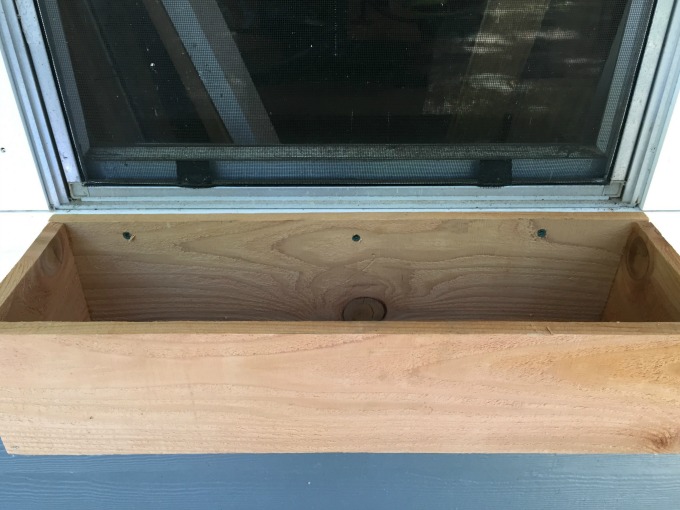
I like using the deck screws because they go through the wood easily and they will stand up to the weather. (Hey – they’re made for decks!)
(4) Line the flower box and add plants.
Once the flower box is securely attached to the trim, add a liner that will allow for drainage. Then add potting soil and plants!
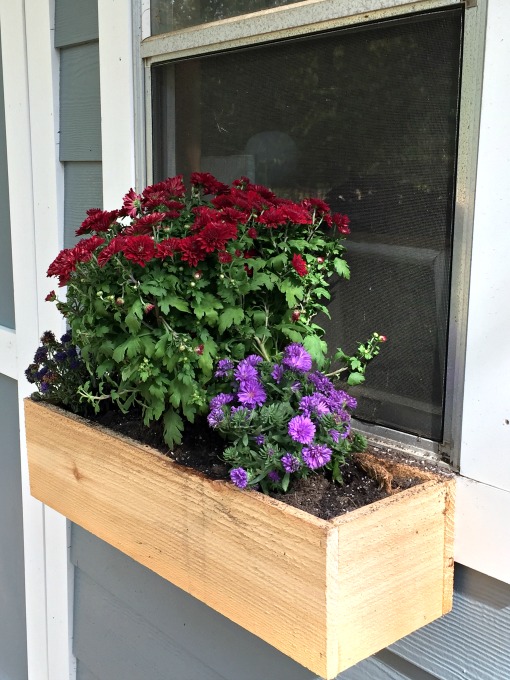
I used mums and purple aster for a fall feel.
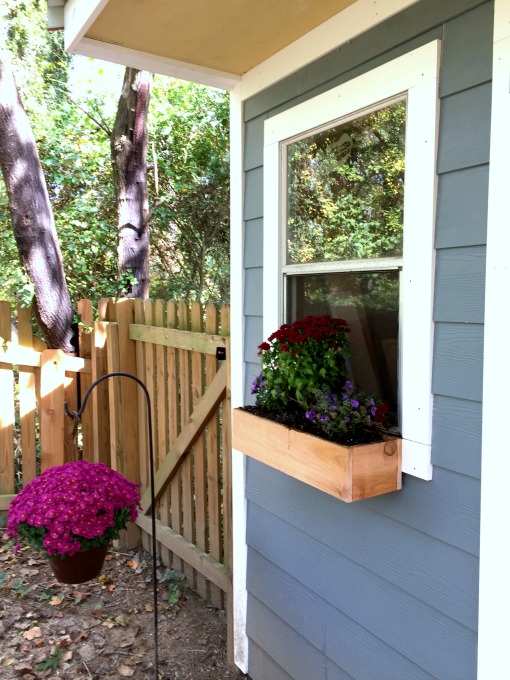
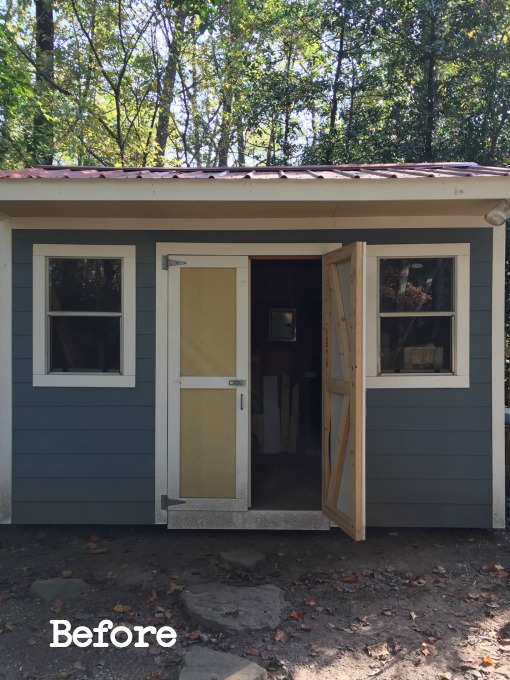
I love how it gives some much needed “curb” appeal (in my yard!) to my shed! Just for comparison, here’s the before – even before the new siding was added:
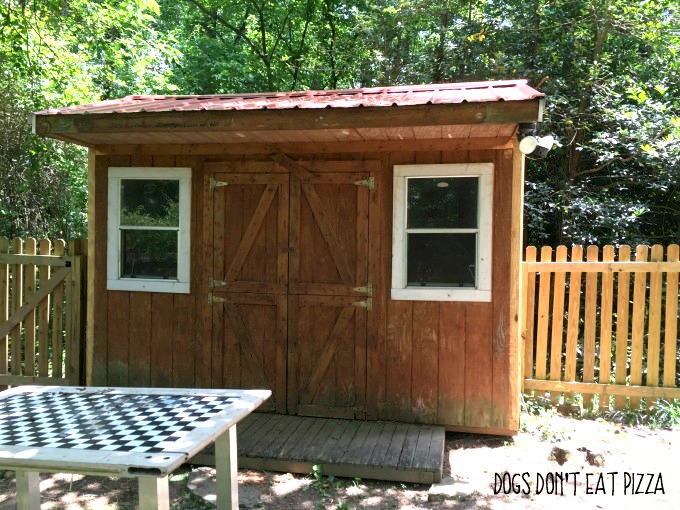
Then after siding, but before window boxes:
And now:
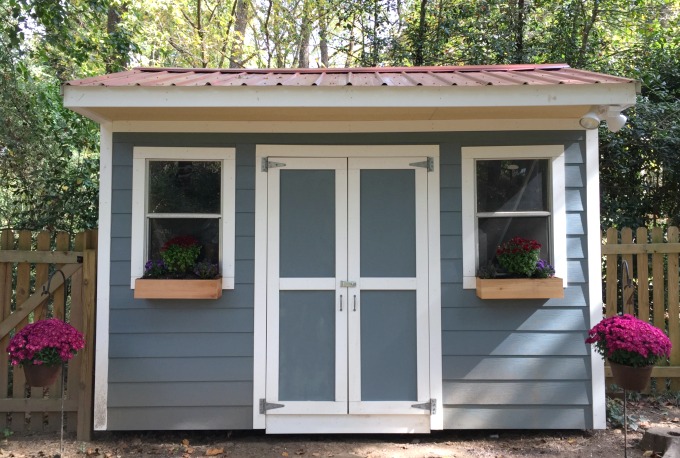
Big difference, right?!?
Want to see the finished shed? Please click HERE for the big reveal!
But, in the meantime, show me what you built! [Entries are closed]
document.write(”);
I can’t wait to see what you built for under $10! Don’t forget that the Power Tool Challenge Team will vote on the best project and one winner will be selected! The winner will receive the RYOBI ONE+ 18-Volt Lithium-Ion Cordless Combo Kit with Miter Saw six-tool package!! How awesome is that?!?
For complete rules, please see this post.
The winner of the Power Tool Challenge Reader Contest is: # 25 Scrap Wood headboard by Shawna Salter Harrington!!
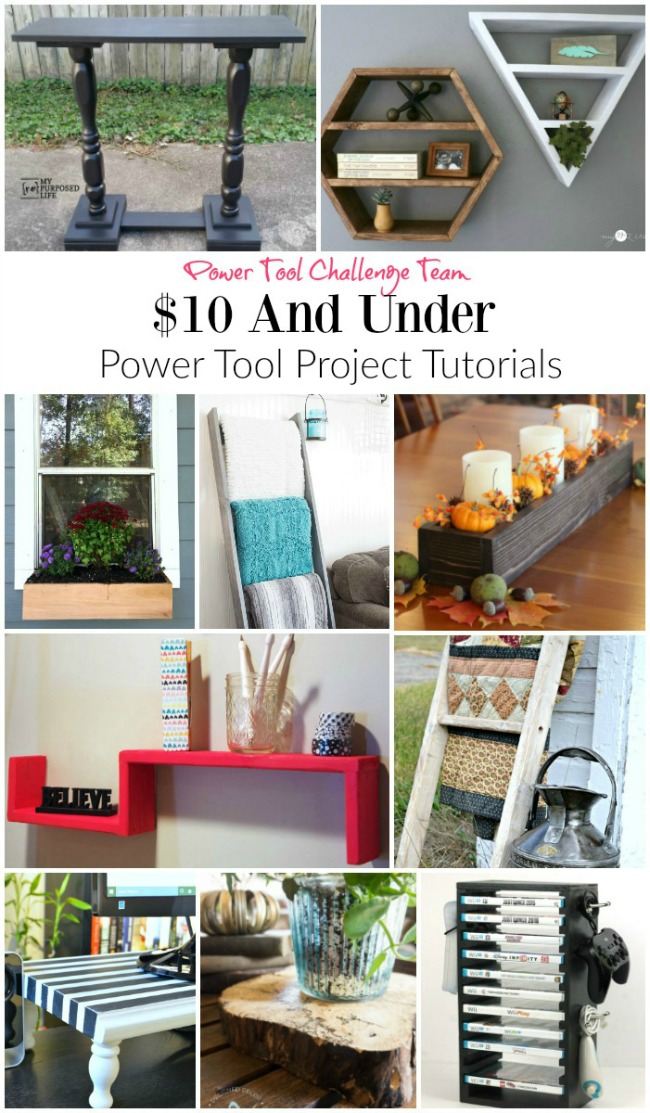
After you link up your project, head on over to the other Power Tool Challenge bloggers’ sites and check out their projects!
Double Pedestal Scrap Wood Table by My Repurposed Life
Hexagon and Triangle Shelves by My Love 2 Create
Blanket Ladder by Domestically Speaking
DIY Wood Centerpiece Box by Virginia Sweet Pea
Easy DIY Shelves by Create and Babble
Vintage Peg Blanket Ladder by H2OBungalow
Computer Monitor Stand by Interior Frugalista
Wood Slice Plant Stand by Designed Decor
DIY Video Game Organization Station Holder by Kim Six Fix
Pin for later!






Leave a comment